
Your menu determines your equipment, your equipment determines your layout, and your layout shapes everything else – including what the build costs.
This guide covers each major decision in the order you’ll face it.
Key Takeaways
- Your menu drives your layout – equipment needs come first, truck dimensions second
- Equipment position affects service speed more than any other interior decision
- Stainless steel is the standard for food contact surfaces because compliance requires it, not just because it lasts
- Your exterior is your primary marketing surface; it works even when the truck isn’t running
- Health and safety requirements need to be built in from the start, not retrofitted
- Planning for future upgrades now costs far less than retrofitting later
Start with Your Menu, Not the Truck
Before any design work begins, list every item you plan to serve and map out the equipment each one requires.
A taco concept needs a flat-top griddle, a steam table, and a tortilla warmer. A coffee and pastry concept needs a commercial espresso machine, a grinder, dairy refrigeration, and a display case. These produce completely different kitchens in terms of electrical load, ventilation requirements, and counter configuration.
Once your equipment list exists, map your workflow: where food enters the truck, where it gets prepped, where it gets cooked, and where it gets handed to the customer. The shortest path between each of those steps is the layout you want.
For a closer look at how menu planning shapes daily operations, the secrets behind a successful food truck menu is worth reading before you finalize your concept.
Design Your Interior Layout Around Workflow Zones
A food truck interior is typically 7 to 8 feet wide and 21 to 30 feet long. That space goes fast. The goal is defined zones – prep, cooking, service, storage – that flow into each other without requiring staff to cross paths or double back.
A few principles that hold across most builds:
- Highest-use equipment at the center of the workflow. A griddle that sees every order shouldn’t sit at the far end of the truck from your prep surface.
- Refrigeration close to both prep and service. Reaching across the kitchen for cold ingredients 200 times during a lunch rush adds up in ways that become obvious after the first week.
- Sinks at logical break points, not just wherever they fit. In Virginia, handwashing stations must be accessible without crossing the cooking zone.
- Vertical space is usable space. Overhead shelving, mounted racks, and undercounter refrigeration units all recover square footage a standard floor plan wastes.
The most common configuration runs cooking equipment along one wall with prep and refrigeration on the opposite side, leaving a center aisle wide enough for one person to move without contact. Builds designed for two-person crews need wider aisles and more deliberately separated stations.
One counterintuitive reality of layout planning: where a piece of equipment sits often determines which model you can buy. An undercounter refrigerator that fits a specific position may require a different depth than what you initially spec’d. A combi oven in one location may require exhaust routing that disrupts the rest of the interior. Lock in equipment positions early and design around them – not the other way around.
Build with the Right Materials
The interior of a food truck absorbs more physical stress than most commercial kitchens. Road vibration, heat cycling, grease, condensation, and constant loading wear down cheap materials quickly.
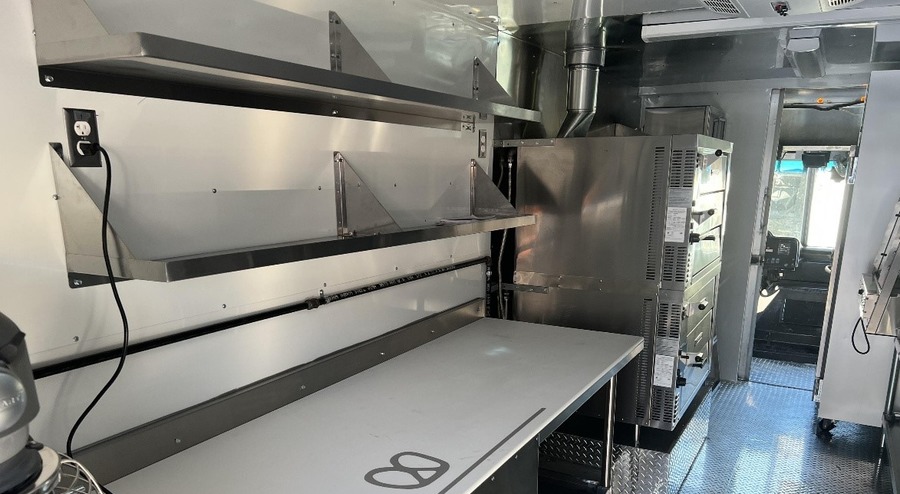
Stainless steel is the practical standard for food contact surfaces for two reasons: it holds up to the conditions, and health inspectors expect it. NSF-certified stainless on countertops, shelving, and equipment surfaces is a compliance requirement, not just a durability preference.
Beyond stainless, a well-specced build also includes:
- Heat-resistant wall finishes in cooking zones
- Commercial-grade floor matting rated for wet kitchen conditions
- Proper insulation in exterior walls to reduce thermal cycling and energy load
These are foundational, and skipping them typically produces repair costs that outpace any initial savings within the first two years of operation. Our custom food truck builds use premium-grade materials throughout for exactly this reason.
Treat Ventilation, Electrical, and Plumbing as One System
These three systems are interconnected, and they’re the most expensive to revise after a build is complete. Plan them together from the start.
Ventilation
Your exhaust hood must be sized to the BTU output of the equipment below it. An undersized hood is a health and safety violation – inspectors measure airflow against calculated cooking loads. Fire suppression nozzles are positioned relative to specific appliances, which is why equipment placement decisions are difficult to undo later.
Electrical
A typical food truck carries between 30 and 100 amps of service depending on equipment load. Commercial fryers, multiple refrigeration units, and espresso machines push builds toward the high end. Most operators also wire in a generator connection for locations without shore power access. Spec your electrical load against your full equipment list before wiring begins.
Plumbing
Plumbing requirements vary by state and municipality, but most jurisdictions require a three-compartment sink, a dedicated handwashing station, and adequate fresh and wastewater tank capacity. These requirements set a minimum plumbing footprint regardless of truck size – confirm what applies in your operating area before finalizing the design.
Plan Storage Before You Think You Need To
Most operators underestimate storage needs until the third or fourth week of operation. Dry goods, disposables, cleaning supplies, packaging, backup ingredients, and small equipment all need designated homes – not the passenger seat.
Build storage into the design from the start:
- Undercounter drawers and cabinets for dry goods and small tools
- Dedicated shelving zones for disposables and packaging (these consistently take more space than operators expect)
- Clearly separated food and non-food storage areas – this matters for inspection, not just organization
Designated storage positions for everything also affect restocking speed between shifts. Trucks without them tend to develop clutter that slows service and creates compliance issues over time.
Design Your Exterior to Stop People Mid-Stride
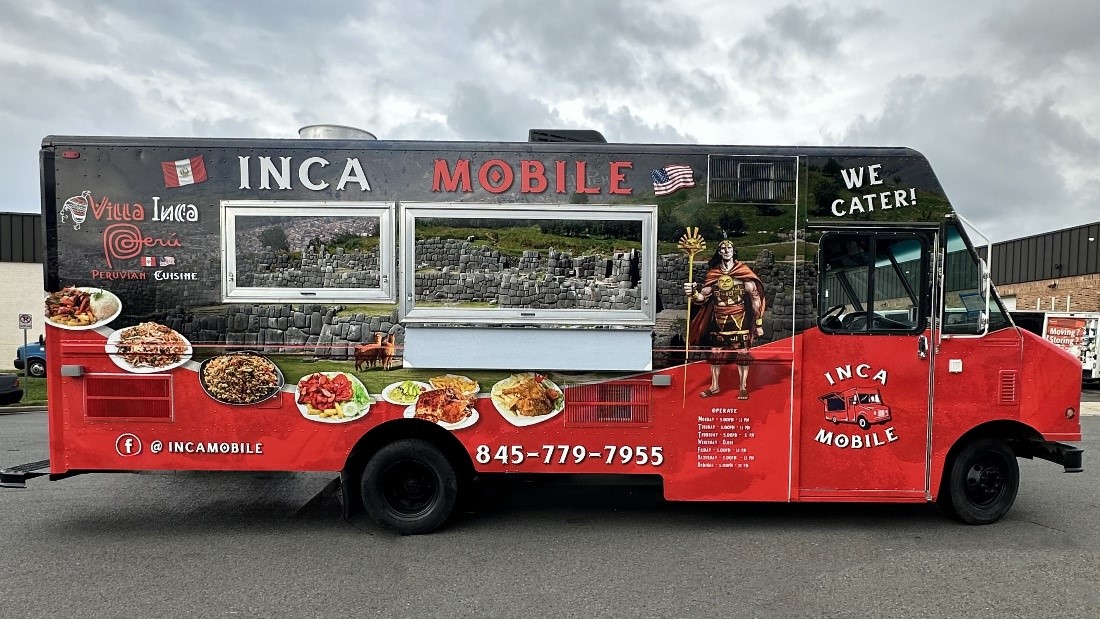
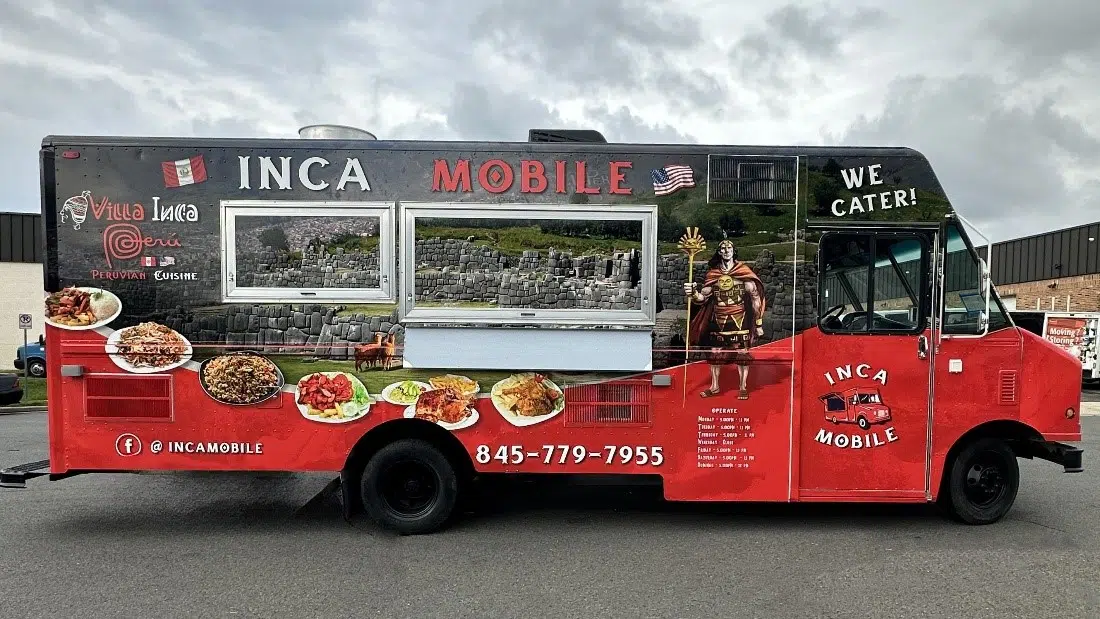
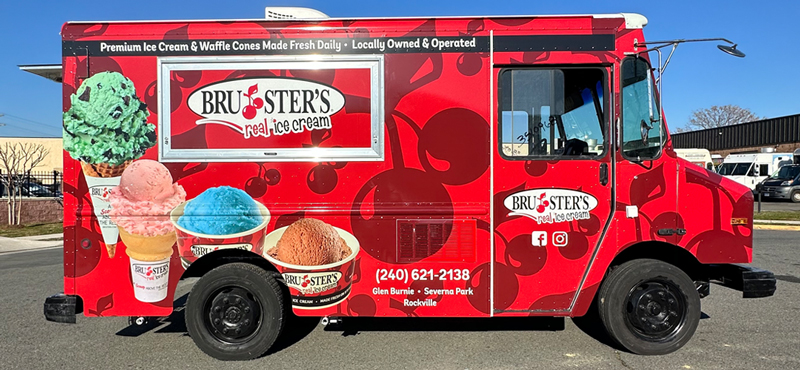
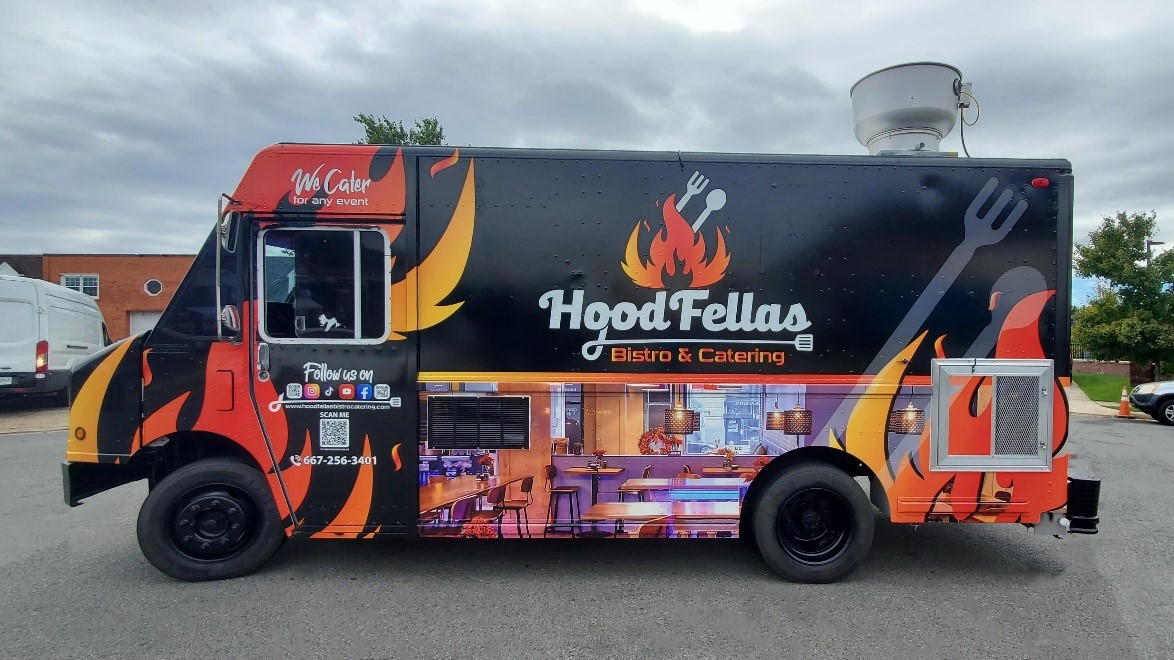
The exterior of a food truck is its most persistent marketing surface – it works whether you’re running service or parked at a commissary lot. A truck with sharp graphics builds recognition with every person who passes it.
Two primary execution methods:
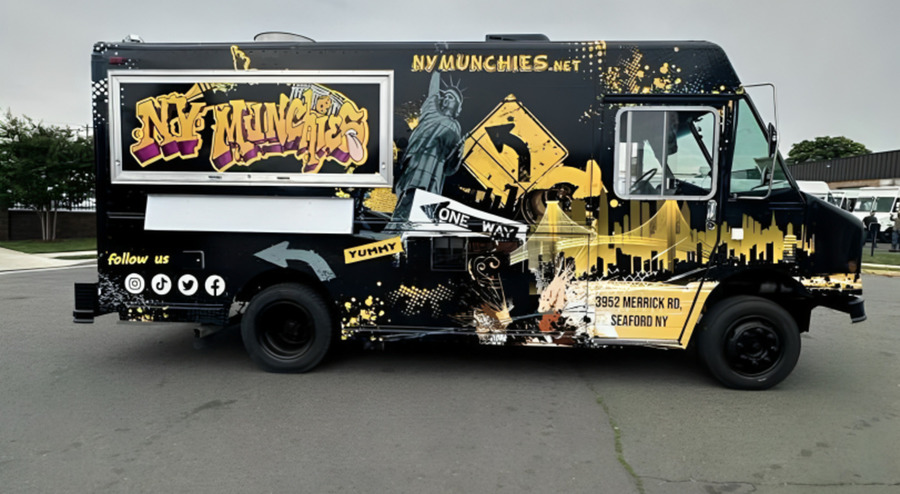
- Vinyl wraps are the most common approach. A full wrap printed from your brand files creates consistent color and graphics across the entire vehicle. Wraps can be replaced as branding evolves, which makes them a practical long-term choice even though professional installation is required.
- Hand painting costs less upfront and allows for texture and detail that printing can’t replicate – a good fit for concepts where a handcrafted aesthetic is part of the brand.
Regardless of method, your exterior should communicate what you sell before a customer reads a single word. Color, imagery, and visual hierarchy do that work faster than copy – the usable window as someone walks past is roughly three seconds.
Menu board placement matters too. Customers need to read your menu before they reach the window, not while standing at it holding up the line. A backlit exterior board positioned where the queue forms reduces wait times and accelerates ordering.
For a deeper look at the visual identity side of this, food truck branding secrets covers logo, color, and brand consistency in detail.
Meet Health and Safety Requirements Before You Apply for Permits
Building a truck that doesn’t meet health code requirements means delays, retrofits, and reinspection fees. All of that costs more than getting it right in the design phase.
Core requirements every food truck build must address:
- Three-compartment sink with proper drainage
- Dedicated handwashing station, separate from the three-compartment sink
- NSF-certified food contact surfaces throughout
- Properly sized and installed exhaust hood with fire suppression
- Safe propane line installation with accessible shutoffs
- Adequate fresh water and wastewater holding capacity
- Refrigeration capable of maintaining required holding temperatures
Our builds are engineered to pass on the first inspection visit. Requirements can also vary by locality beyond state minimums – our team can walk you through what applies to your specific operating area during the design consultation.
Plan for Equipment You Don’t Have Yet
The most expensive words in a custom build are “I wish we’d planned for that.” A fryer added after the fact requires new hood coverage, new electrical capacity, and often a layout reconfiguration that touches everything around it.
Design for where your operation will be in two to three years, not just where it starts:
- Run a dedicated circuit for equipment you’re not buying yet but expect to add
- Leave a section of counter without permanent fixtures so the configuration can change
- Size your fresh water tank for a busier operation than your opening-day volume
Modular components make future changes significantly less expensive. Operators who expand menus or upgrade equipment after launch typically don’t have to rebuild from scratch when the original build accounts for it.
Conclusion
A food truck design that works is one where every decision – layout, materials, systems, exterior – connects back to how the truck will actually be used.
Get the sequence right: menu first, equipment second, layout third, everything else after. The builds that run cleanly and pass inspection on the first visit are the ones where those decisions were made in order, before fabrication began.
If you’re ready to start planning, request a free quote and we’ll work through the design together.