
Running a food truck profitably takes more than a strong menu and a reliable parking spot.
The operators who stay in business long-term tend to share one trait: they understand where their money goes, and they make deliberate decisions about it.
Costs that seem manageable in the first month have a way of compounding quietly, and by the time owners notice a margin problem, the habits that caused it are already baked in.
This guide walks through 13 cost management considerations that deserve attention at every stage of a food truck business, from initial planning through daily operations. Each one connects to something real that operators encounter, not just concepts from a textbook.
If you’re still in the planning stage or already running daily service, there’s something here worth applying.
Key Takeaways
- Startup costs include permits, equipment, and supplies, not just the truck price.
- Fixed and variable costs require separate tracking and separate strategies.
- Menu profitability analysis reveals which dishes earn margin and which don’t.
- Preventive maintenance costs less than a single breakdown on a peak day.
- Staffing decisions based on real sales data reduce labor waste.
- A POS system is the foundation for any meaningful cost tracking.
- Negotiated supplier terms can reduce cost of goods by 10–20%.
- Track where customers come from before spending more on marketing.
- Catering and events diversify revenue and often carry stronger margins.
- Monthly financial reviews catch problems before they become expensive.
- Energy-efficient equipment reduces generator load and fuel costs over time.
- Consistent customer feedback improves menu decisions and catches issues early.
- An emergency fund of three months’ fixed costs is the baseline to work toward.
1. Initial Investment Planning
The first big number most prospective owners focus on is the truck itself. That’s understandable, but it’s also where budget surprises tend to start.
A realistic initial investment calculation covers the truck or trailer, commercial-grade kitchen equipment, health department permits, commissary agreements, liability insurance, initial food inventory, and working capital to cover the first few weeks before revenue stabilizes.
Skipping any of these categories during planning doesn’t make them go away. It just means they appear as unexpected expenses after you’ve already committed.
If you’re in the design phase, it helps to build a full cost map before finalizing anything. We walk through how we approach this with clients from the start so the equipment and layout decisions reflect actual budget constraints, not just wish lists.
2. Operating Expenses Breakdown
Once you’re running, your costs divide into two categories that require different management approaches.
Fixed costs, things like insurance premiums, monthly commissary fees, and any parking agreements, stay roughly constant regardless of how many meals you sell. Variable costs, ingredients, fuel, disposable packaging, and hourly wages, move with volume.
The practical importance of this distinction is that fixed costs demand coverage before you turn a profit on any given day. If your fixed monthly obligations total $3,000, you need to clear that before your variable cost structure even matters. Operators who blur this distinction often misjudge their break-even point and overspend during slow periods.
Keeping these two columns separate in any spreadsheet or accounting tool makes weekly cash flow much easier to read.
3. Menu Engineering for Profitability
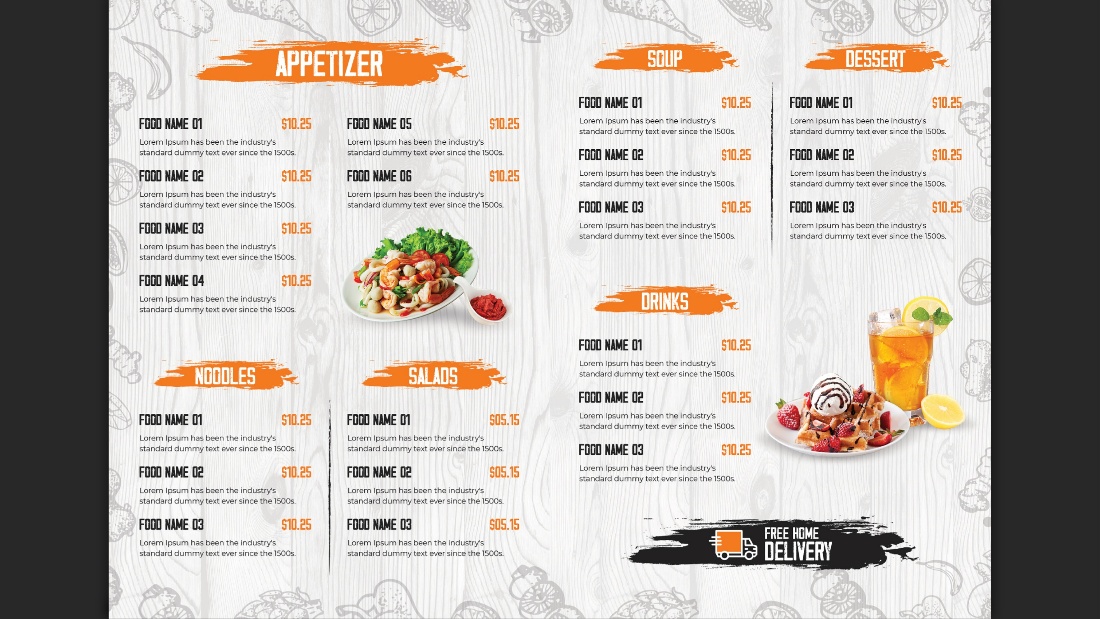
Not every item on a food truck menu earns equal margin. A dish that sells well but requires expensive ingredients, long prep time, and specialized equipment might actually underperform compared to a simpler item that moves quickly and costs less to produce.
Menu engineering is the practice of calculating food cost percentage and contribution margin for each item so you know which dishes are working and which ones are coasting on popularity without pulling their weight financially.
The typical benchmark for food cost percentage in mobile food service runs between 28% and 35% of selling price, though this varies by concept. Items that fall outside that range aren’t necessarily cut, but they warrant a closer look at portion size, pricing, or ingredient substitution.
A menu that’s been engineered intentionally tends to be tighter in scope and more consistent in margin, both of which make daily operations easier to manage. For more on building a menu that’s designed to sell, see top creative food truck menus that actually sell.
4. Regular Maintenance Schedule
Equipment failures on a food truck hit differently than they do in a brick-and-mortar kitchen.
You’re not just dealing with a repair bill; you’re losing an entire service day, possibly during a weekend or an event where you’d normally do strong volume. The cost of a missed high-revenue day often exceeds what a routine maintenance check would have cost by a wide margin.
A written maintenance schedule that covers the generator, refrigeration units, cooking equipment, and the vehicle itself reduces the chance of surprises. Most operators who run
this well spend a small amount of time monthly and a few hours quarterly doing basic checks. That discipline protects revenue streams that took real effort to build. The other benefit is that a well-maintained truck retains resale value, which matters if you eventually upgrade or expand.
5. Efficient Staffing Strategies
Labor is typically the second or third largest cost category for food truck operators, and it’s one of the more controllable variables once you have reliable sales data. The key is aligning scheduled hours with actual demand rather than running consistent coverage regardless of traffic patterns.
This means tracking sales by day, time of day, and location over time. After a few months of consistent data collection, patterns emerge, and those patterns tell you when a second pair of hands genuinely speeds up service versus when a solo operator can handle the volume without meaningful wait times.
Overstaffing by even a few hours per day adds up quickly over a month. Understaffing during a rush damages both sales and reputation. Neither extreme serves the business well, but the fix is the same: make staffing decisions based on data, not intuition alone.
6. Technology Integration
A point-of-sale system designed for mobile food service does more than process payments. It tracks item sales by day and location, flags inventory depletion, and gives you the reporting foundation needed for real financial analysis.
Without it, cost management relies on estimates that become less accurate as the business grows.
Inventory management tools, even basic ones, reduce over-purchasing and catch theft or spoilage earlier. The ROI on a well-chosen POS system typically shows up within the first few months through reduced waste and better purchasing decisions.
This is one area where the upfront cost is modest relative to what it returns. Platforms like Toast and Square for Restaurants both offer mobile-focused configurations that work well in food truck environments.
7. Vendor Negotiations
Ingredient costs are a lever that many early-stage operators underestimate. Once you have a sense of your monthly purchasing volume, it’s worth approaching suppliers directly to discuss pricing.
Bulk purchasing agreements, consistent order schedules, and loyalty to a primary supplier can each produce meaningful discounts, sometimes 10 to 20 percent off standard pricing depending on the category.
The relationships themselves also have practical value beyond discounts. A supplier who knows your business can flag supply disruptions early, hold inventory for a pickup, or extend short-term credit during a slow stretch.
That kind of flexibility is difficult to put a number on but has real operational value over time. Building a network of two or three reliable suppliers in each major category also reduces exposure to a single source’s pricing changes or stockouts.
8. Marketing ROI Analysis
It’s easy to spend money on marketing without knowing which spending is actually generating customers.
Social media advertising, event sponsorships, loyalty programs, and local partnerships all have different return profiles, and the right mix depends on your specific customer base and location.
The baseline habit worth developing is tracking where ne
w customers come from. Even an informal ask at the window gives useful directional data. Channels that are generating traffic are worth continued investment. Channels that aren’t, even if they feel like they should be working, deserve either a strategy adjustment or reallocation.
Marketing dollars pointed at the wrong channel are a cost without a return, and that’s as damaging to margin as any ingredient overspend.
9. Diversification for Stability
A food truck that depends entirely on walk-up street service has all of its revenue concentrated in a single channel that’s sensitive to weather, location, and foot traffic patterns.
Adding catering events, private bookings, and appearances at farmers markets or festivals creates income streams that run on different cycles and help smooth out the slow weeks.
Catering in particular tends to carry strong margins because ticket size is larger, waste is lower due to pre-set menus, and setup logistics are more predictable. Partnerships with local breweries, office parks, or event venues can also generate recurring bookings that reduce the week-to-week uncertainty of solo street vending.
For a fuller picture of how location choices affect revenue, this guide on location strategy is worth reading alongside this section.

10. Regular Financial Reviews
Operators who review their numbers only when something feels wrong tend to catch problems later, when they’re more expensive to fix.
A monthly review habit that covers income, cost of goods sold, labor costs, and net margin takes less time than most people expect once the tracking system is set up, and it surfaces trends before they become crises.
The goal isn’t to produce a formal financial report. It’s to answer a few specific questions each month:
- Did margin hold relative to last month?
- Did any cost category move unexpectedly?
- Is the revenue mix shifting between channels?
Those questions, answered consistently, make the financial picture of a food truck business much more navigable. Accounting tools like QuickBooks Self-Employed or Wave both offer low-cost options that work well for small mobile operations.
11. Environmental Considerations for Cost Efficiency
Energy-efficient cooking equipment, LED interior lighting, and battery-assisted power systems reduce fuel consumption and generator load over time. These are real cost savings, not just brand positioning.
A commercial fryer or flat-top that draws less power during idle periods, for example, meaningfully reduces generator runtime over the course of a busy week.
Compostable and recyclable packaging also deserves a practical look. While some eco-friendly packaging carries a small per-unit premium, certain product categories, particularly cups, clamshells, and napkins, have come down in price as supply has scaled.
The calculus worth running is whether the cost difference, if any, is offset by customer perception and alignment with local regulations that are moving in this direction regardless.
12. Customer Feedback Loop for Continuous Improvement
A structured feedback practice does two things that matter for cost management.
First, it tells you which menu items are actually satisfying customers versus which ones generate complaints or indifference, letting you make menu decisions with better information.
Second, it catches service or quality issues before they become visible in declining sales.
The feedback channel doesn’t need to be elaborate. A consistent review of Google, Yelp, and social mentions, combined with an occasional direct conversation at the window, gives most operators enough signal to act on.
The operators we’ve seen get the most from this habit are the ones who treat feedback as data rather than commentary. Something said by three different customers in the same week about the same dish is a message worth taking seriously.
13. Emergency Fund for Unforeseen Circumstances
A generator failure two days before a booked catering event. A health department inspection that requires an unexpected equipment modification. A slow January following a strong holiday season.
These aren’t hypothetical scenarios; they’re routine parts of food truck ownership, and operators without a financial cushion end up making expensive short-term decisions to cover them.
The standard recommendation is three months of fixed operating costs set aside in a separate account that isn’t touched for day-to-day expenses. Getting there can take time, especially in the early months, but even a smaller reserve meaningfully reduces the cost of the unexpected.
Business interruption insurance is also worth reviewing; it covers income loss during specific types of operational disruptions and is relatively inexpensive compared to what it pays out when needed.
Putting It Together
Cost management in a food truck business isn’t a one-time exercise. It’s a set of ongoing habits: tracking the right numbers, reviewing them regularly, and adjusting when something is off.
The 13 considerations above aren’t meant to be implemented all at once. Prioritize the ones that address your most active pressure points right now, and build from there.
If you’re still in the planning stage and want to start with a truck designed to support efficient operations from day one, we’re happy to walk through what that looks like. You can explore our food truck models and food trailer options, browse the build gallery to see completed projects, or reach out directly to talk through your specific concept.