
Starting a food truck business puts you in control of your concept, your schedule, and your overhead. Compared to a brick-and-mortar restaurant, the barriers to entry are lower, the location flexibility is real, and the path from idea to open window can move surprisingly fast, provided you do the groundwork first.
This guide walks through each step of launching a food truck, from early research through your first paying customers, with practical detail at each stage.
Key Takeaways
- Before you spend anything, research your market and build a real business plan with actual numbers
- Budget $50,000 to $200,000 for startup costs and secure financing before you start shopping
- Choose your truck based on your menu, your workflow, and whether it will pass inspection
- Start the permitting process early, equip for what you actually cook, and use a soft launch before opening day
- Think about growth from the beginning, because your commissary, POS, and vendor setup all get harder to change later
Step 1: Research the Market Before You Commit
The most common mistake first-time operators make is deciding on a concept before they understand the market they’re entering. Before you take the first steps toward buying a food truck, spend time studying the local landscape.
Find out what cuisines are already well-represented in your target area. Look at where existing trucks are operating, how often they post on social media, and whether their lines are long or short.
Pay attention to gaps. A neighborhood with three taco trucks and no breakfast options is telling you something.
Concrete questions to answer during this phase:
- What type of food do you plan to serve, and who specifically are you serving it to?
- Where will you realistically operate, and what are the parking and permitting rules there?
- What does it cost to run a food truck in your city on a monthly basis, including commissary fees, insurance, fuel, and supplies?
- Who are your direct competitors, and what are they doing well or poorly?
This research shapes your concept, your pricing, and your business plan. Skip it, and you’re guessing.
Step 2: Build a Business Plan That’s Actually Useful
A business plan isn’t just a document you make for a bank. It’s a forcing function that makes you think through the decisions you’d otherwise defer. A good one is specific, not aspirational.
Your plan should cover:
Concept and menu: What are you selling, and why will people choose you over the alternatives? Nail down your core menu and test the recipes before you commit to equipment.
Startup costs and budget: Include the truck or trailer, equipment, permits, initial inventory, branding, and a working capital cushion for the first few months. Don’t lowball this.
Revenue and pricing model: Estimate how many transactions you need per shift to break even. Work backward from realistic ticket averages.
Operational plan: How many people will you need on a busy Saturday? What’s your commissary situation? How will you handle scheduling, restocking, and equipment maintenance?
Marketing strategy: Social media is table stakes. But also think about how you’ll get into events, catering contracts, and recurring spots that deliver predictable revenue.

Step 3: Figure Out Your Financing
Most food trucks cost between $50,000 and $200,000 to launch, depending on whether you’re buying new or used, how much custom buildout you need, and what equipment your menu requires. That range is wide, and where you land depends heavily on your concept.
Common funding sources:
- SBA loans are a common path for food truck operators. The SBA 7(a) loan program allows up to $5 million and can cover both vehicle and equipment costs.
- Equipment financing lets you spread the truck cost over time, often with the vehicle itself as collateral.
- Personal savings or investors give you more flexibility but require either capital on hand or a compelling pitch.
- Crowdfunding has worked for some operators, particularly those with an established community or a strong story behind the concept.
Our food truck financing guide breaks down what lenders look for and how to prepare your application.
Step 4: Choose the Right Truck or Trailer
The vehicle you operate out of will affect every part of your daily life as an operator.
The layout determines how efficiently you can move during a lunch rush.
The equipment spec determines what you can realistically cook.
The build quality determines how often you’re dealing with breakdowns and failed health inspections.
There’s a meaningful difference between buying a used truck off Craigslist and commissioning a custom food truck built around your specific menu and workflow.
We design and build both custom food trucks and custom food trailers with NSF-approved equipment and layouts that hold up under health department inspection.
What to evaluate when choosing your vehicle:
- Does the layout match how your crew will actually move during service?
- Is the electrical and plumbing capacity appropriate for your equipment load?
- Is the build inspection-ready for your state and municipality?
- How much custom work do you need, and does the builder have a track record of delivering it on time?
Our build gallery shows a range of completed trucks and trailers if you want a reference point for what’s possible.
Step 5: Obtain the Permits and Licenses You Actually Need
Permitting is where a lot of new operators hit unexpected delays. Requirements vary by city and state, and some jurisdictions have waitlists for mobile vending permits that can stretch months.
Start this process earlier than you think you need to. You can learn more here: What Permits and Licenses Do You Need to Start a Food Truck.
Most food truck operators need some combination of the following:
- Business license (city and/or state level)
- Health department permit and initial inspection
- Fire marshal inspection and approval
- Vehicle registration and commercial auto insurance
- Food handler certifications for you and any staff
- Mobile vending permit or commissary agreement, depending on local rules
Check with your city’s business licensing office and health department directly.
If your truck is being built by Elhaj, our team can advise on build specifications that meet the health code requirements for your operating area, which reduces the risk of failing an inspection over an equipment placement issue.
Step 6: Equip Your Truck for the Menu You’re Actually Serving
Your equipment list should follow from your menu, not the other way around.
A smash burger concept needs a flat-top griddle and a high-capacity exhaust hood. A cold beverage or dessert truck needs refrigeration and less fire suppression.
Over-equipping wastes space and budget; under-equipping creates operational bottlenecks.
Standard equipment categories to plan for:
- Cooking equipment: grills, fryers, flat tops, ovens, steamers
- Refrigeration: reach-in or undercounter refrigerators, freezers
- Food prep: stainless counters, cutting surfaces, storage
- Sanitation: three-compartment sink, hand wash sink, fresh and grey water tanks
- Ventilation: commercial hood with suppression system
- Power: generator or shore power hookup, electrical panel sized to your load
Custom-built trucks from Elhaj have these systems designed and installed together, so you’re not retrofitting a generator or replumbing a sink after the fact.
Step 7: Build a Brand That People Remember
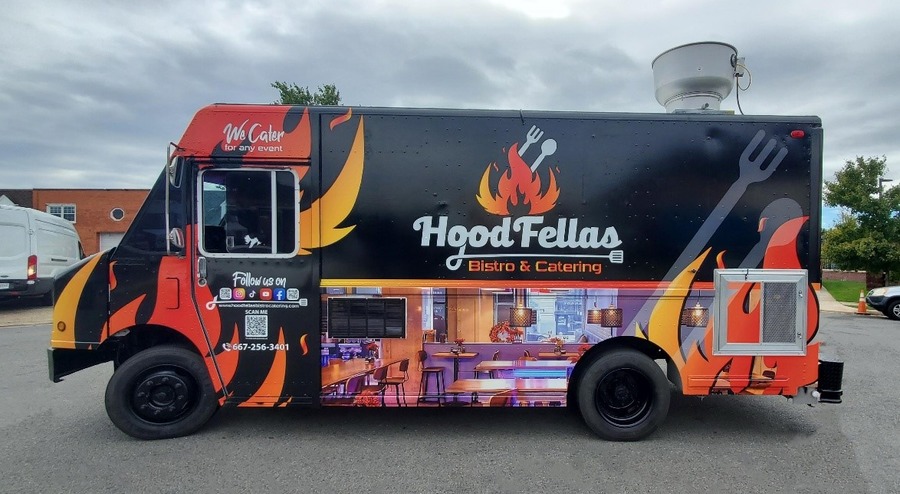
Branding for a food truck isn’t just about looking good, though that matters more than it does for most businesses because the truck itself is your most visible advertising.
A well-designed wrap draws attention from a block away and signals professionalism before anyone tastes the food.
Beyond the truck’s appearance:
- Your name and logo should be readable, memorable, and not dependent on a pun that loses its charm after the third time someone hears it.
- Claim your social media handles early and post consistently. Instagram and TikTok are where food truck audiences congregate, and short video content of your prep process or plating performs well.
- Build a simple website with your location schedule, menu, and a catering inquiry form. People look this up before they commit to driving somewhere.
- Loyalty programs, even simple punch cards, bring regulars back more reliably than one-time promotional discounts.
Step 8: Identify Reliable Locations and Build Relationships
The best food truck operators don’t just show up and hope for foot traffic. They work to establish recurring spots and relationships with event organizers, property managers, and corporate office parks.
High-performing location categories include:
- Office parks and business districts during lunch hours
- Breweries and wineries (many actively seek food truck partnerships)
- Farmers markets and weekend festivals
- College campuses
- Private events and catering contracts
Before you commit to a location, verify that you’re legally allowed to operate there. Many cities require a vending permit or property owner agreement for private property stops, and some downtown areas have designated zones.
Our guide to best food truck events and locations covers specific venue types and how to approach booking them.
Step 9: Run a Soft Launch Before Your Official Opening
A soft launch is not a formality. It’s the best way to identify operational problems before they happen in front of a crowd that’s posting to Yelp or Google.
Invite a smaller group, set realistic volume expectations, and use the session to test throughput, ticket times, and equipment performance under real conditions.
What to focus on during a soft launch:
- How long does it take to fulfill a typical order from start to handoff?
- Where are the bottlenecks in your workflow?
- How does the equipment perform under sustained use?
- What’s missing from the setup that you didn’t anticipate?
Train your staff before the soft launch, not during it. Cover food safety, the menu in full, the POS system, and how to handle a backed-up line without letting quality slip.
For a detailed pre-launch checklist, the guide to launching a successful food truck is worth reading before you set a date.
Step 10: Plan for Growth From the Beginning
The operators who scale successfully usually have growth built into their thinking from early on, even when they’re still working out the kinks on the first truck.
A few directions operators commonly pursue after establishing their initial route:
- Catering: Private events, corporate lunches, and weddings offer higher ticket values and more predictable scheduling than street vending.
- A second vehicle: Adding a second custom food truck or trailer lets you cover multiple locations simultaneously or expand into a new market without giving up your existing spot.
- Seasonal or limited-time menu additions: These generate repeat visits from regulars who already know you and give you something new to promote.
The infrastructure decisions you make on your first truck, including your POS system, your commissary setup, and your vendor relationships, all become easier to scale if you set them up with growth in mind.
Ready to Build Your Food Truck?
If you’re in the planning phase and want to talk through what a custom build would look like for your concept, Elhaj Custom Food Trucks works with operators at every stage, from first-time entrepreneurs still sketching out a menu to established owners adding a second vehicle to their fleet.
Request a free build estimate or browse the food trucks and food trailers pages to get a sense of what’s possible.