The food truck sector has changed more in the past five years than in the previous decade.
Rising build quality, stronger regulations, higher customer expectations, and a shift toward data-driven decision making are reshaping how operators plan their businesses.
As 2026 approaches, several trends are set to influence how new trucks and trailers are designed, financed, and run.
Below is a clear look at the trends shaping the industry for 2026.
Key Takeaways
- Industry growth continues, driven by higher demand for custom-built food trucks and trailers.
- Operators are adopting digital tools for ordering, communication, and customer engagement.
- Sustainability, power efficiency, and flexible kitchen layouts are shaping build decisions.
- Menu trends are moving toward authenticity, dietary-specific offerings, and collaboration-focused concepts.
- Location strategy is expanding beyond street vending into events, food-truck parks, and hybrid models.
Market Shifts Heading Into 2026
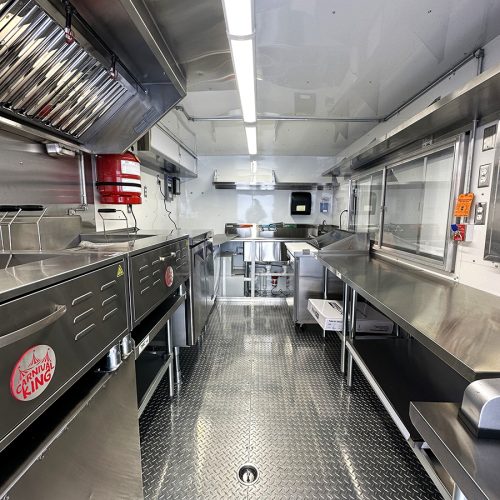
Higher performance expectations for new builds
Operators entering the market no longer accept basic conversions or low-end used units.
They want custom-designed builds with stronger electrical systems, streamlined workflows, and branding that works across in-person and digital channels.
This is reflected in the rising demand for purpose-built mobile kitchens, which Expert Market Research notes as one of the fastest-growing segments of the broader food service equipment category.
As equipment prices rise, buyers want assurance that the build quality supports long-term use and easier maintenance. That pressure continues into 2026.
Local governments investing in food truck-friendly spaces
Cities across the country are opening food truck parks or revising zoning rules to make mobile food service more accessible.
These policies help reduce startup friction and create stable weekly income for operators who rely on predictable locations.
Technology and Digital Integration
Technology is no longer optional for mobile food service.
Operators with real-time location updates, mobile ordering, and pre-order options generally outperform those without them.
Software companies report increased interest in mobile food–specific POS systems and order-management tools.
Real-time customer engagement
Food truck customers expect to know where a truck is located each day, how long the wait is, and what the menu looks like.
Platforms such as Instagram, TikTok, and truck-locator apps continue to influence where sales come from.
This mirrors findings from Toast’s industry reporting, where operators using digital ordering tools saw higher average order values than those relying on in-person ordering only.
Kitchen tech and operational automation
Although full automation is not standard in mobile kitchens, operators are adding equipment with better temperature consistency, faster cooking cycles, and lower electrical draw.
Builders who integrate space-efficient layouts and upgraded power systems help owners reduce long-term costs.
The early stages of electric food trucks
Electric food trucks are still a small share of the market, but interest is growing due to local clean-air policies and rising fuel prices.
Fully electric units remain limited by cost and charging infrastructure, but hybrid and battery-assisted systems are appearing more often in request-for-quote submissions to builders.
Analysts expect slow but steady progress through 2026.
Menu and Culinary Trends
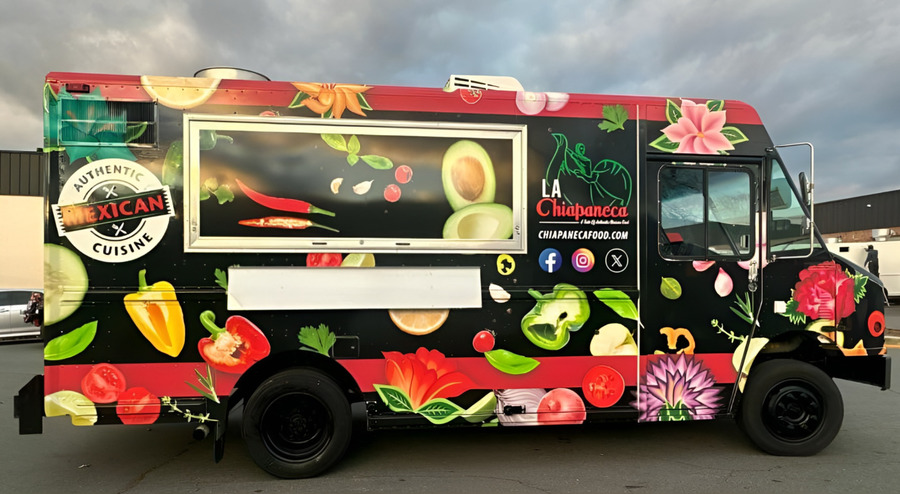
Regionally inspired concepts and authentic cuisine
Consumers continue to prefer authentic, regionally inspired menus over generic fast-casual food.
Global flavors, specialty items, and limited seasonal menus are among the strongest performers across food truck-focused events and local festivals.
Dietary-specific offerings
Demand for gluten-free, dairy-free, vegan, and allergen-aware menus is rising.
This has influenced trailer layouts as operators need dedicated prep areas, better refrigeration, and tighter separation between ingredients.
Collaboration menus
Breweries, event venues, and independent chefs regularly partner with food trucks to offer rotating menus.
This increases demand for builds that support fast menu swaps and modular equipment.
Sustainability Trends
Sustainability is shaping both operations and build decisions.
Lower-waste packaging
Compostable and recyclable packaging continues to gain traction, supported by local regulations in several cities.
This affects storage needs inside kitchens, which impacts shelving, refrigeration, and supply planning during a build.
Power and fuel considerations
Generators remain standard, but operators are paying more attention to fuel efficiency and noise levels.
Trailers with upgraded electrical systems, solar-assist options, and battery banks are becoming more common requests.
Location Strategy: Events, Food Truck Parks, and Hybrid Models
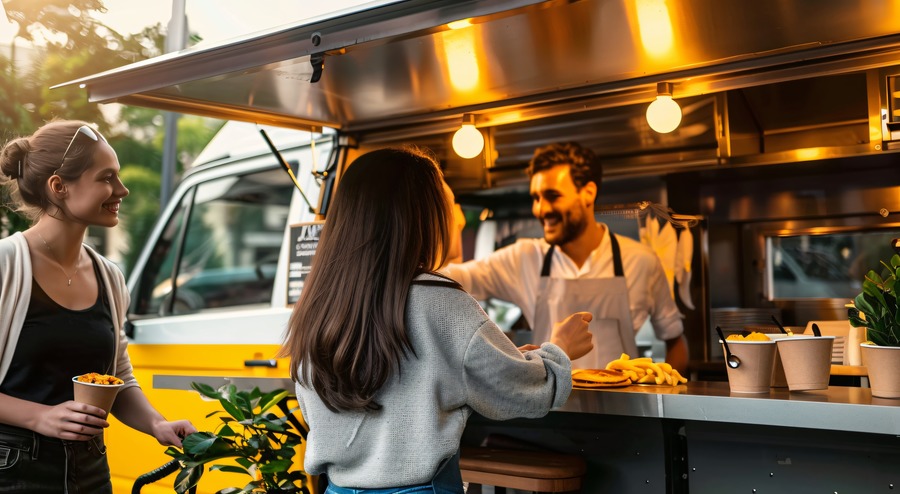
Operators are increasing revenue through a mix of consistent weekly stops, food truck parks, catering, and pop-up partnerships.
Trucks with flexible layouts can pivot between high-volume festival service and slower, high-margin catering events.
As more states streamline permitting, mobility will continue to improve.
Learn more: Where is the Best Place to Park A Food Truck?
Build Trends: What Buyers Want in 2026
Modular layouts
Operators want builds that adapt to multiple menu types. Swap-ready equipment, adjustable shelving, and space-efficient prep zones are becoming standard requests.
Stronger electrical systems
Electrical failures are one of the top causes of downtime. Many builders, including Elhaj, design units with upgraded wiring, improved airflow for equipment, and isolated circuits to support high-draw appliances.
Branding and visual identity
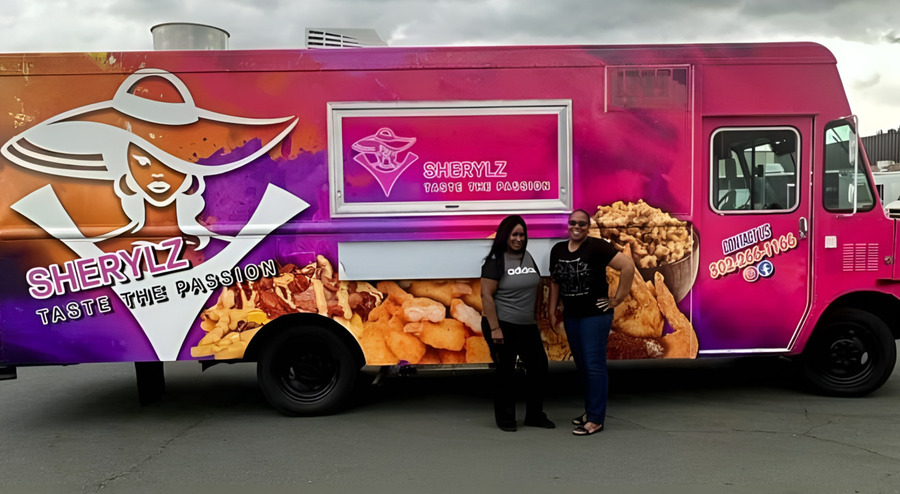
Operators expect a turn-key visual brand: exterior wrap preparation, menu board mounting, lighting, and signage integration. Builds that support easy branding changes hold more long-term value.
Strategic Recommendations for Food Truck Owners in 2026
1. Strengthen forecasting and inventory control
Rising food costs and supply volatility make waste management a direct profitability lever. Operators benefit from using simple demand-forecasting tools tied to past sales, weather, and location. Many food trucks already track sales by stop; formalizing that process helps reduce over-ordering and improves margin stability.
2. Build a dependable weekly “anchor schedule”
Even if a truck shifts between parks, catering, and events, having 2–3 consistent weekly stops improves repeat business and reduces marketing load. Customers often follow reliable patterns, and many trucks underperform because their schedule changes too frequently.
3. Tighten your permitting and compliance workflow
Because regulatory fragmentation remains one of the biggest friction points, operators who maintain centralized digital copies of permits, inspection notes, commissary agreements, and fire certificates avoid delays that cost operating days. This also supports rapid expansion into new counties.
4. Strengthen the mobile ordering experience
Small refinements like accurate prep times, clear menu modifiers, and automatic sold-out flags directly reduce customer frustration. Digital ordering is already driving higher order values; refining the experience compounds that benefit.
5. Build an email and SMS list separate from social media
Social reach is volatile. Operators who maintain a small but active list of local customers gain a direct communication channel for schedule changes, specials, and event bookings. Even one event fully booked through direct communication pays for the effort.
6. Leverage winterization and seasonality planning
In colder states, many trucks lose 30–50% of revenue seasonally. The strongest operators proactively adapt with:
- cold-weather menus that travel well
- partnerships with indoor event venues
- pre-sold meal programs or catering packages
- partial schedule shifts toward reliable, heated food-truck parks
Seasonal preparedness is one of the clearest separators between stable and unstable truck operations.
7. Audit electrical load and equipment health quarterly
Based on the build-trend section, electrical failures remain a major cause of downtime. Operators benefit from a simple quarterly audit: breaker panel heat, generator output consistency, GFI wear, and refrigeration temperature logs. These checks dramatically reduce catastrophic mid-service failures.
8. Treat the truck as a brand, not just a kitchen
Operators who systematize their brand across the exterior wrap, menu style, social presence, and in-person service build trust faster. Consistency also improves the ROI of every marketing action – customers need fewer exposures to remember and revisit.
9. Use events as testing grounds, not just revenue days
High-traffic events give operators real-time data on:
- bottlenecks in layout
- menu clarity
- price elasticity
- speed of service
Testing improvements event-by-event creates compounding operational gains throughout the year.
Final Thoughts
The food truck industry entering 2026 is defined by higher expectations and sharper competition.
- Success favors operators and builders who treat mobile food service as a long-term business, not a temporary experiment.
- The trucks and trailers performing best are the ones designed with future power needs, efficient layouts, and clear branding in mind.
- The operators growing year over year are those who plan their schedules, refine their ordering systems, and stay consistent in how they show up for customers.
The common thread across the strongest performers is discipline: disciplined builds, disciplined operations, and disciplined communication.
As the industry matures, that discipline becomes the difference between a truck that struggles through each season and a business that continues to grow.
The companies that act on these trends now will be in a far stronger position as the market evolves.